


Book Review - The Gennie in Your Genes
- info711573
- Jul 20, 2025
- 5 min read

Updated: Jan 25
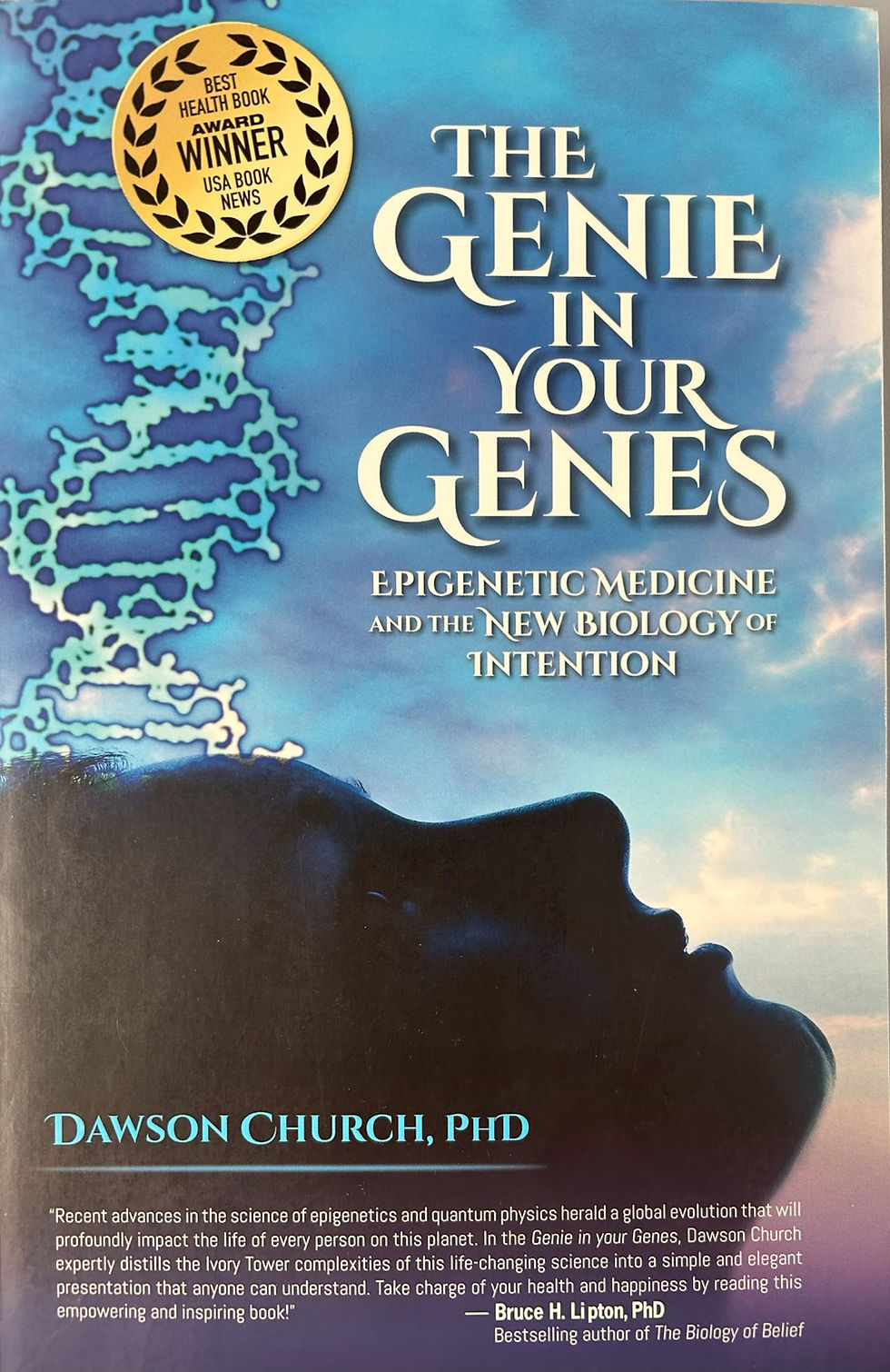
For generations, we’ve been told that our genes are the strict rulers of our fate, deciding everything from how we look to how we act. This idea, known as genetic determinism, has left many of us feeling powerless, as if our health and happiness were predestined by the DNA we got from our parents. But what if this belief is completely off base? What if we actually have the power to change our own genetic expression, a power that could revolutionize healthcare and transform our lives?
Enter the exciting world of epigenetics, a ground-breaking field that offers a much more dynamic and hopeful view of our genes. It turns out that our genes aren’t set in stone but are more like an ever-changing orchestra, with their expression influenced by a mix of environmental factors, including our thoughts, emotions, and experiences. This means we aren’t just passive recipients of our genetic code; we play an active role in crafting our own biological story.
Think of DNA as the hardware of a computer and epigenetics as the software. The hardware stays the same, but the software—the programs that run on it—can be changed endlessly, dramatically shifting how the computer works. In the same way, epigenetic changes, like DNA methylation and histone modification, act like switches, turning genes on or off and adjusting their activity. These changes are influenced by everything from what we eat and our exposure to toxins to the thoughts and emotions we nurture.
This new understanding has huge implications for our health. It suggests that chronic diseases, autoimmune disorders, and even mental health conditions aren’t just determined by genetics but are also heavily shaped by epigenetic factors. This opens up a new path for healing, one that goes beyond the limits of traditional medicine and taps into the power of the mind-body connection.
Energy medicine and energy psychology are leading the charge in this new biological era. These innovative approaches hold incredible potential for easing chronic illnesses, reducing autoimmune symptoms, and healing psychological traumas often faster and more effectively than conventional treatments. They work on the idea that our thoughts and emotions aren’t just abstract experiences but have real biological effects, influencing gene expression through epigenetic mechanisms.
Take, for example, Immediate Early Genes (IEGs), a special class of genes that quickly respond to stimuli, including our thoughts and feelings. These genes form a crucial link between our experiences and our biology, impacting everything from our immune system to our stress response. Positive emotions like joy and gratitude can activate IEGs tied to growth and healing, while negative emotions like fear and anger can trigger IEGs linked to stress and inflammation. This direct connection between our inner world and our genetic expression highlights the incredible power of our minds to affect our health.
The implications of this go way beyond just personal health. Imagine a world where we can solve social conflicts and bring about positive political changes by harnessing the power of emotional well-being. This is the promise of energy medicine and energy psychology—a radical shift in human consciousness that could ripple through society, impacting everything from healthcare to social interactions. It’s a transformation that could be as profound as the scientific and artistic advancements of the Renaissance.
The growing scientific evidence backing these methods is driving this transformative movement forward. Pioneers in this field are documenting countless case studies showing the remarkable power of energy medicine and energy psychology to heal and transform lives. At the same time, researchers are mapping the exact neural pathways through which these changes happen in the human body. Every thought, every feeling sets off a complex cascade of biochemical reactions within our cells, leaving its mark on our genetic expression.
This emerging understanding challenges the long-held belief that our genes are unchangeable. The old paradigm of genetic determinism, which has dominated medical thinking for decades, is falling apart under the weight of new scientific discoveries. The simplistic idea of blaming disease on a single faulty gene, while convenient for headlines and research papers, doesn’t capture the complexity of human biology. The truth is much more nuanced and empowering.
The future of healthcare lies in weaving these revolutionary insights into conventional medical practice. As Richard Dawkins wisely said, “There is no such thing as alternative medicine. There is only medicine that works and medicine that doesn’t.” If a treatment proves effective, no matter where it comes from, it should be embraced and integrated into mainstream medical practice. Research on techniques like Emotional Freedom Techniques (EFT) has shown its effectiveness in treating post-traumatic stress disorder (PTSD), anxiety, and depression in just a few sessions. This suggests that we may be on the brink of a new era in mental healthcare, one where these debilitating conditions can be significantly reduced, if not eradicated. If we have the societal will and commitment, we can harness the same collective energy that led to the eradication of diseases like cholera and polio to tackle the challenges of mental illness.
Moreover, the future of therapy will likely involve personalized approaches tailored to individual genetic profiles. As genetic testing becomes more affordable and accessible, it will be possible to determine which combination of therapies, from EFT and qigong to yoga and EMDR, is most effective for a particular individual. Simple saliva tests could provide rapid, color-coded results, paving the way for highly personalized medicine.
The growing recognition of the importance of spirituality in healing is another significant trend. Studies measuring biological markers have shown a strong correlation between individuals’ beliefs and their health outcomes. These markers have also revealed that emotional issues like stress are not just “all in the mind” but have profound physiological effects throughout the body. The reductionist division of human experience into separate physical, mental, and spiritual domains is no longer adequate. A more holistic approach is essential for understanding the interconnectedness of these aspects.
Human beings do not exist in isolation. We thrive as part of a thriving biological and spiritual ecosystem. By fostering a positive emotional atmosphere—what I call the “emo-sphere”—we can create a world that nurtures acceptance, growth, and love. Despite the ongoing challenges and conflicts we face, there is a growing global awareness of the importance of positive emotions. We are at a critical juncture, poised for a profound global transformation. Just as the institution of slavery rapidly transitioned from being considered normal to being universally condemned, the negative emotional conditioning that enslaves so many minds can also be rapidly dispelled. Just as our ancestors learned to eradicate infectious diseases, we have the potential to catalyze a deep global shift, cultivating a beautiful emo-sphere that nourishes both ourselves and future generations. The power to heal, to transform, and to create a better world lies within each of us, waiting to be unleashed—the genie in our genes.
You may also like:If inheritance feels bigger than DNA, these posts explore family memory and embodied history.
Generational syndrome
https://www.biodecodingwithamk.com/post/generational-syndrome
Family programs for your illnesses
https://www.biodecodingwithamk.com/post/family-programs-for-your-illnesses
Unravelling the tapestry of our past
https://www.biodecodingwithamk.com/post/unravelling-the-tapestry-of-our-past
Family secrets


Comments